Your First Hive Purchase!
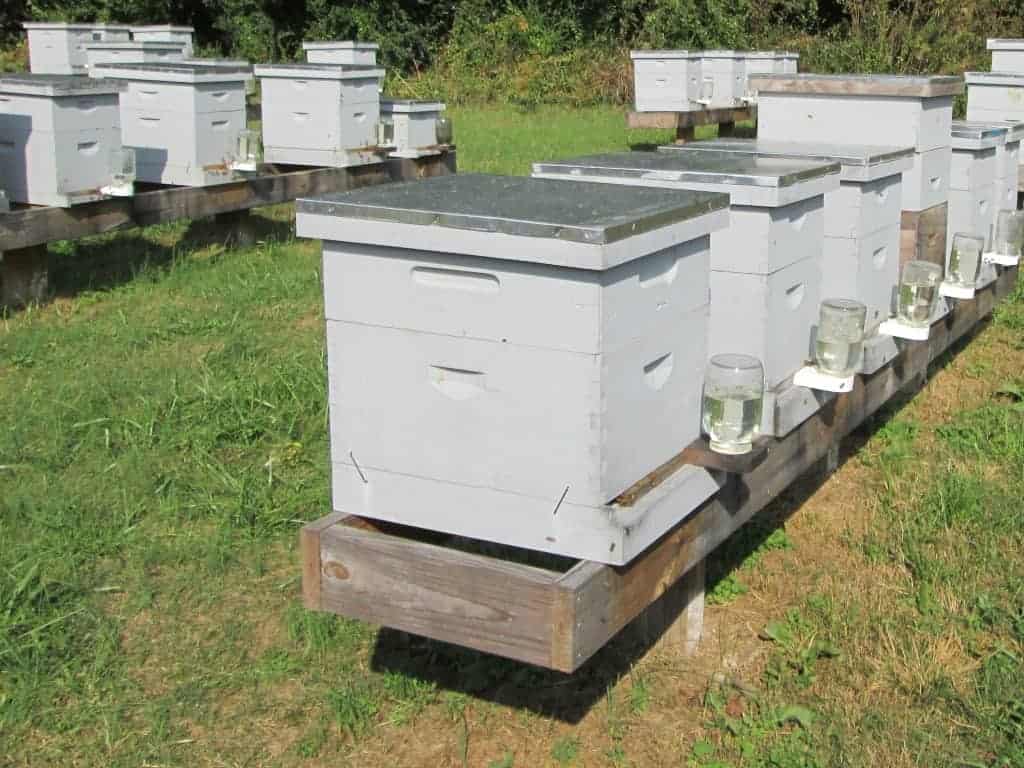
The most challenging part of beekeeping for the beginner is the initial setup. You wonder, “What do I need and what do I not need?”
First: Order your bees immediately. We often hear from folks who bought a hive but can't find bees. Due to shortages, they sell out in the first couple months of the year. Don't wait!
We recommend an 8-frame hive. Bees naturally grow vertically rather than horizontally, and 8-frame supers are much lighter (approx. 60 lbs) than 10-frame supers (80+ lbs). Your back will thank you later.
Standard "First Year" Hive Checklist
| Qty | Description |
|---|---|
| 1 | Screen Bottom Board (South) or Solid Bottom Board (North) |
| 1 | 9 5/8” Deep Brood box |
| 2 | 6 5/8” Medium Supers |
| 1 | Inner Cover & Telescopic Cover |
| 8 | 9 1/8” Wood frames with 8 ½” waxed plastic foundation |
| 16 | 7 1/4” Wood frames with 6 ½” waxed plastic foundation |
| 1 | Entrance Reducer |
| 1 | Boardman feeder (Plastic type) |
Always elevate your hive 18” to 24” off the ground to reduce pests, prevent wood rot, and ensure proper ventilation. For protection, apply two coats of 10-year latex paint to the exterior only. Never paint the interior; the wood should remain natural to manage humidity and provide a healthy environment for your colony. Allow the paint to cure for at least two weeks before introducing bees.
To source these items, start with a local beekeeping supply store. Staying local allows you to ask region-specific questions about nectar flow and winter prep that big-box retailers simply can't answer.
Was this guide helpful for your first purchase?
Join the Discussion on Facebook