What is a Honey Bee Swarm?
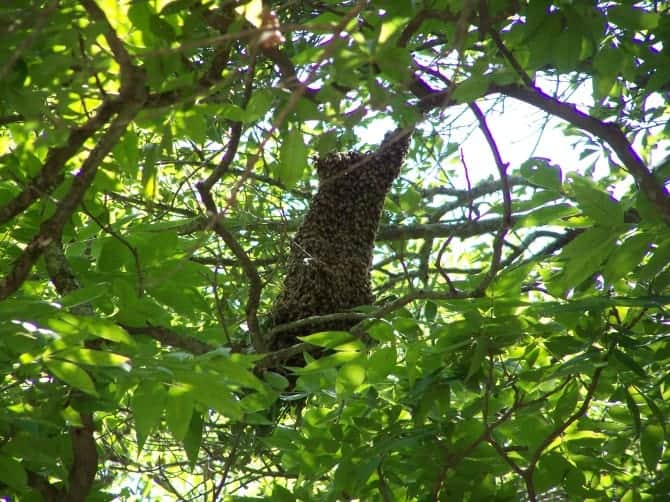
A “cloud of bees” forming a swarm is a spectacular sight. It is the natural way colonies reproduce and expand their presence in the world.
The Departure
When a colony grows to a certain size, new queens are reared in special peanut-shaped queen cells and fed a rich diet of “royal jelly.” Shortly before a new queen emerges, the old queen leaves the nest with 10,000 to 20,000 workers to establish a new home elsewhere.
Signs of an impending swarm include queen cups at the edge of a frame and workers gorging themselves on honey to prepare for the journey. Once scout bees find a suitable site, the swarm moves out, often resting temporarily on a branch while the final destination is confirmed.
The Nuptial Flight
Back in the old hive, the first new queen to emerge seeks out all other queen cells. She tears them open and stings her rivals to death, ensuring she is the sole ruler. Soon after, she takes her “nuptial” flight, seeking out clusters of drones in elevated areas.
Mating with many drones is vital for a queen's long-term success and colony survival. After this 30-minute flight, she returns to begin her life’s work of laying eggs.
Spotted a Swarm?
Swarms typically occur between Spring and July. If you see one, contact us or your nearest beekeeper. If accessible, the colony can be safely collected and placed in a managed hive.
Report a SwarmNotes adapted from The Beekeeper’s Bible