Proper Hive Placement
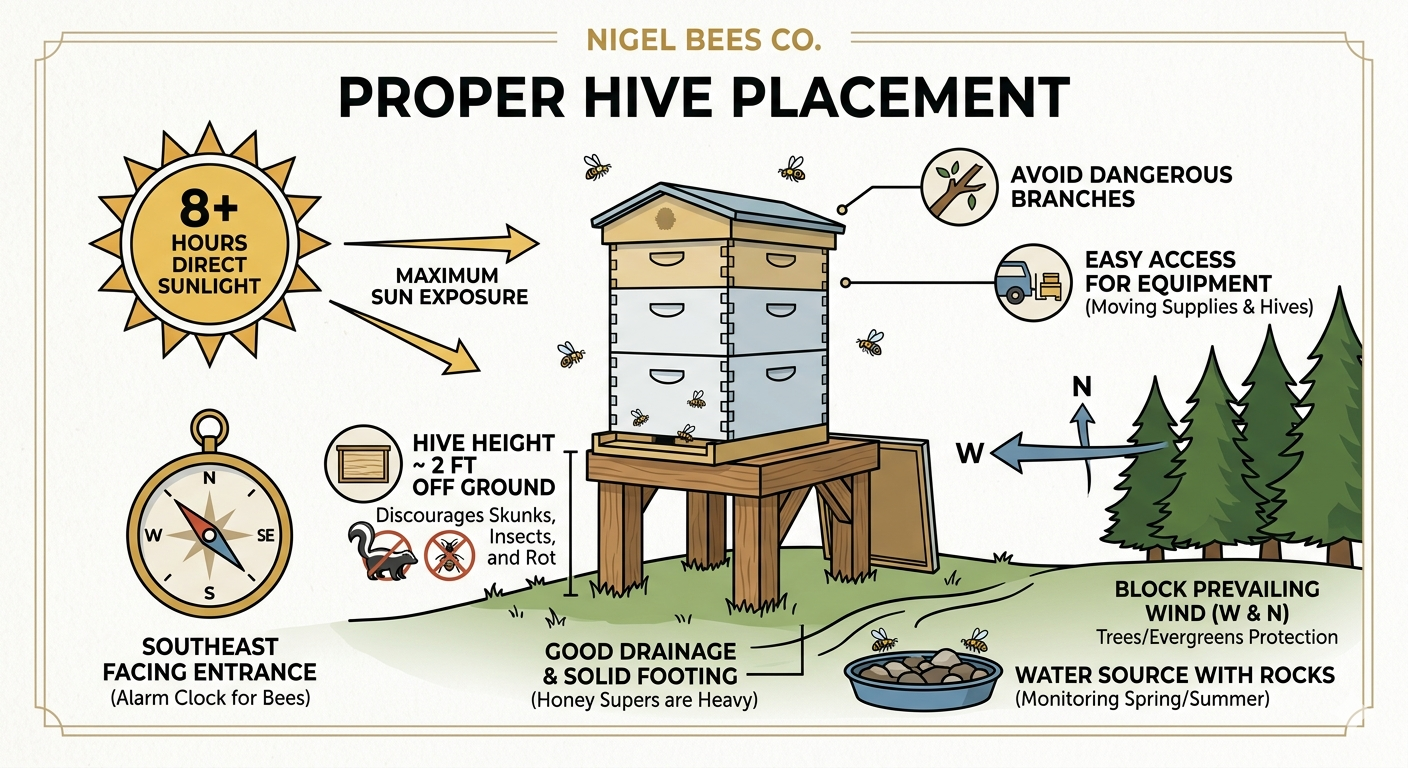
The picture above is a great reference for new beekeepers to understand the importance of picking that special location. Getting this wrong is probably the number one problem beginners make, and I hope this article will help bring clarity to the subject.
The first thing we have to remember is “bees thrive in direct sunlight.” The more sun, the better for your hive! I like to see, during the summer months, 8+ hours of direct sunlight on the hives. It is alright to have some shade, but placing a hive in a forest will promote higher moisture levels and Small Hive Beetles here in the South.
The direction of the hive entrance should point Southeast. The sun acts as an alarm clock for the bees; when light shines into the hive, it comes to life. Do not guess—most smartphones have a compass, or borrow one to get direct Southeast.
Hive height is important to avoid backaches while working. I place my hives on a wood frame that is approx. 2 ft. off the ground. This height, as seen in the diagram, discourages skunks and insects from disturbing the hive, and prevents bottom board rot caused by ground contact.
Environment & Access
Placement requires good drainage. This includes getting your hive above the “100 year flood plain” to avoid sad scenarios where floodwaters carry off hives. Solid footing is also required, as honey supers get heavy, and slipping while carrying them is dangerous.
Consider prevailing winds from the West and North. Cold fronts with high winds can blow off covers, exposing bees to rain and potential chilling. Tree-lines help slow the wind, but always watch for dangerous branches that might break and fall on the hive. If winds are unavoidable, anchor your covers (we use one-gallon milk containers filled with water).
Finally, moving equipment like honey supers, hive bodies, or even entire hives will happen! Ensure you have easy access to the apiary before you set up your hive for the first time.
The Critical Need for Water
Water is extremely important year-round. No water, no bees. You must provide a source, and we encourage placing a large bowl or trough filled with rocks. The rocks are essential, as they give the bees a safe landing platform to drink without drowning.
I would not encourage placing hives near swimming pools. Whether in your yard or a neighbor’s, a pool is a recipe for nightmares as bees will fly to the nearest water source. Good options include shallow livestock feeding pans, plastic paint pans, or cement bird baths (which offer good traction). Water must be monitored very closely during the Spring and Summer, as bees use it to air-condition the hive.